
Can't be turned on
· Check the power connection.
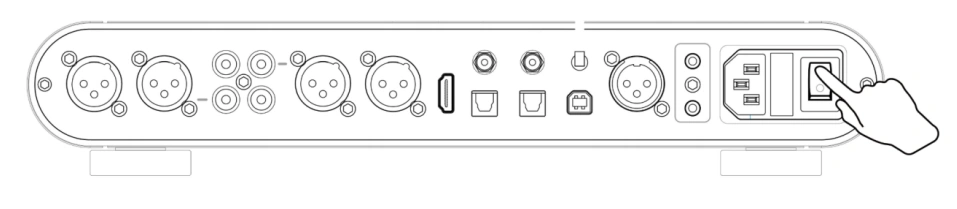
· Check if the rear panel power switch is in the ON position.
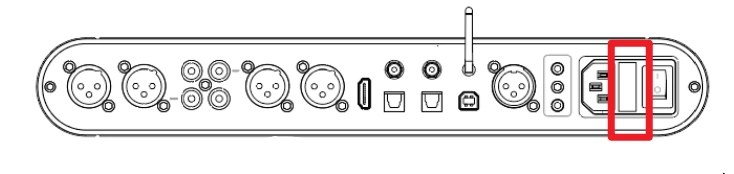
· If the fuse is blown, try using the spare fuse.
· Try with another power cable.
· Try with another power outlet.
No sound
· The device did not power on. Check the power supply.
· Check that the proper input source is selected. Check the settings in [Setup Menu - Input Settings - Input option]. Press the knob on the front panel to switch the input channel.
· Check whether the output settings are correct. Check “Output select” and “Output option” in [Setup Menu - Output Settings].
· Check the connections for all devices.
· Insert connection cables all the way in.
· Check the volume of all devices and whether they are muted.
· Try disabling the PEQ function.
a, If the PEQ function is enabled and high-sample-rate muting is also active, sampling rates above 192kHz may be muted.
b, The PEQ gain settings might be too low, especially the pre-gain.
· Bluethooth IN: Too low volume on phone. Please adjust volume.
· USB IN:
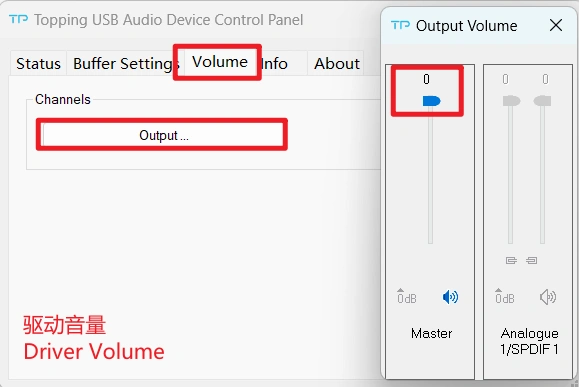
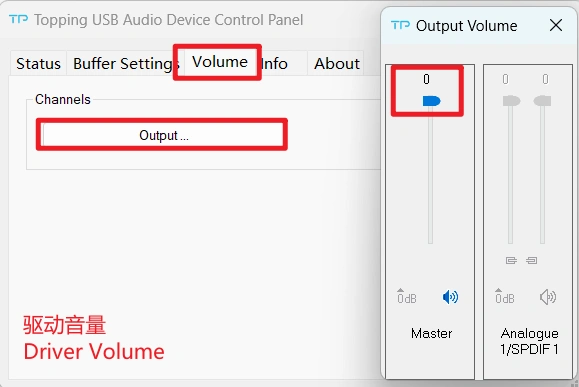
a, Too low volume on PC. Please check and adjust the computer system volume, music player volume and driver volume.
b, Select the default output device of your music player or computer as this unit.
Noisy playback
· Try with other songs.
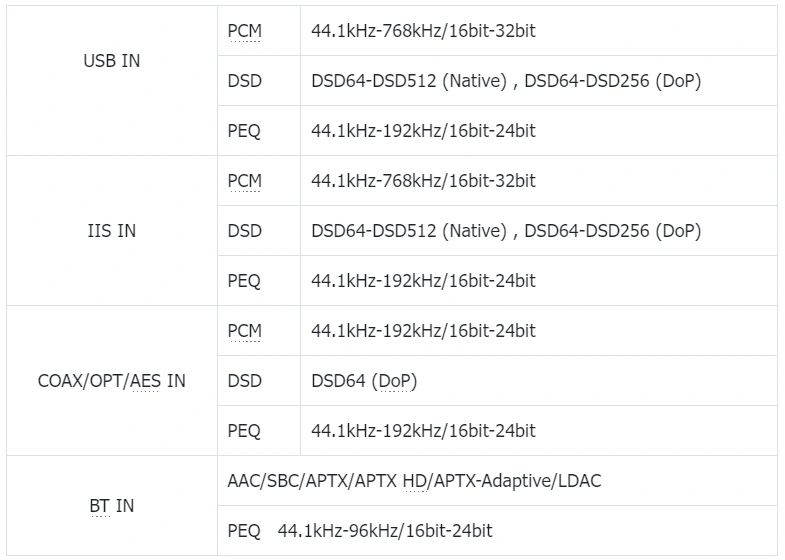
· The specifications of songs are not supported by this unit.
· If the noise appears only when playing DSD files, please check and adjust the computer system volume, music player volume and driver volume to the maximum.
· If you experience distortion after enabling the PEQ function, it may be due to the preamp gain being set too high, causing signal overload. Please try gradually reducing the preamp gain until the distortion disappears completely.
· Check to see if the problem is with the source, downstream equipment and cables.
· If the noise disappears after unplugging the USB cable, it may be interference from the source. You could try to add a USB isolation between this unit and the source.
Abnormal sound
· Check if the PEQ and Crossfeed function is ON. [Setup menu - DSP config]
· Check to see if the problem is with the source, downstream equipment and cables.
One channel with noise/no output
Check to see if the problem is with the source, downstream equipment and cables. You can try swapping the left and right channel connections and try with another source.
Channel imbalance
· Set to C (Balance) in [Setup Menu - Output settings - Channel balance].

· If the PEQ function is enabled, check whether it is due to different gain settings for the left and right channels.
· Check to see if the problem is with the source, downstream equipment and cables. You can try swapping the left and right channel connections and try with another source.
Cannot pair Bluetooth
· Enable Bluetooth function in the setup menu first. [Setup Menu - Input settings - Bluetooth]
· May be already connected to another Bluetooth device. Press and hold the Brightness button on the remote control to let this unit enter pairing mode.
· Bring the Bluetooth device near to this unit.
· Power off and restart the unit. On your phone, unpair other devices, restart Bluetooth, and then try to pair again.
Bluetooth in: the sound is cut off
· Bring the Bluetooth device near to this unit.
· Remove obstructions between the Bluetooth device and this unit.
· To prevent electromagnetic interference, locate this unit away from microwave ovens, wireless LAN devices and other Bluetooth devices.
· Reconnect the Bluetooth device.
The connected USB device does not recognize this unit
· Check that the proper input source is selected. Check the settings in [Setup Menu - Input Settings - Input option]. Press the knob on the front panel to switch the input channel.
· Verify that the USB settings are correct: [Setup Menu - Advanced - UAC].
· Check whether the USB connection is working properly, and try using a different USB cable. It is recommended to use a USB cable shorter than 1.5 meters.
· Try connecting to another USB port on the computer. Use a rear USB port on the PC whenever possible, and avoid using USB hubs—especially unpowered ones.
· Disconnect any unnecessary USB devices from the computer.
· If the driver is not installed correctly, please reinstall the driver.
· If the issue persists, it may be related to the computer. Check the PC or try connecting to another one.
· When connecting to a smartphone, note that some models require manually enabling the OTG function.
Remote control not responding
· Enable remote control function in the setup menu first. [Setup Menu - Advance - Remote]
· Try to insert one CR2032 button cell.
· After installing the battery, if the remote control still doesn’t work, try pressing and holding both the “Standby” and “Mute” buttons simultaneously until the indicator light flashes twice to complete pairing.
· Please aim at the remote control receiver.
· Bring the remote control close to the device.
· Use your Android phone's camera to look at the transmitter at the top of the remote. If it doesn't blink when you press the remote button, the remote is defective.
· If you have more than one Topping device, check that you are using the correct remote control.
The sample rate displayed on the device does not match the music file
The choice of music player app, the setting of music player and the setting of computer/phone will all have an impact on the sampling rate.
The sampling rate displayed by this unit is the sampling rate of the input signal, and it will not change the sampling rate by itself.
If the music player can be set to exclusive mode, the audio signal will not be resampled by the computer/phone, so the sampling rate of the output signal is the sampling rate of the original file, and the sampling rate displayed by this unit is also the sampling rate of the original file.
Because some players can't be set to exclusive mode, the audio signal will be resampled by the computer/phone and then output. So this unit will always display the sampling rate set by the computer/phone.
We recommend using Audirvana player on MAC OS and Foobar on windows
Unsupported
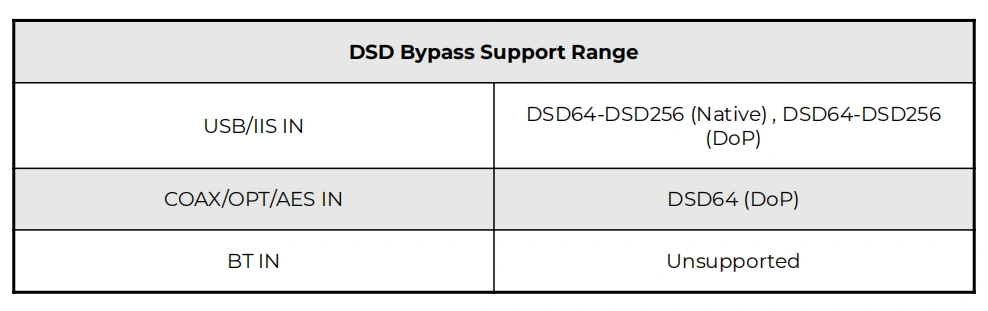
It indicates that DSD Bypass is currently enabled and unsupported DSD512 audio file is being played.
File size large / Firmware damage / Topping other firmware / Unknown file / Update failed / No firmware
· The firmware package downloaded from the official website must be extracted first. Follow the firmware upgrade instructions and copy the extracted .Topping firmware file to a USB drive.
· Make sure to upgrade with the correct firmware for your model. Do not use firmware intended for other products.
· Do not disconnect or interrupt the process during the upgrade.
· If the upgrade fails, try again using a different USB cable, USB port, or computer.


